Chickpeas, pants, and Autopac - a guide to ancient Rome
Those of you reading this post might wonder why it takes me so long to generate new content for this blog. Or maybe you're just wondering why I just used the phrase "generate new content" when I could have just said "write stuff." Exactly!
(Also, I literally just corrected one of my grade 8 students on the use of double negatives while I was writing that paragraph. And then I warned him not to drop his chicken burger which he was carrying in an inadvisably risky way involving tupperware. And you wonder why I have no time to write.)
Anyway, I have decided to lower my own standards for this blog (yes, they can go even lower), and rather than exposing myself to public ridicule on account of my juvenile literary tastes, composing a magnificent essay involving memes that took me way too long to track down, or viciously tearing apart some poor, struggling author's life work, I will simply tell you about the history book I'm currently reading (which, incidentally, was the thing I said I was going to do when I started out. Go figure!) But before we get there, if you want some background on how I first became a history nerd, you can find that here; for information on how you can join this sad club, click here; to share a word of sympathy, leave a comment below.
For Christmas this year I received the holy grail of presents for a history nerd-man: $100 in Chapters gift cards. Obviously, this is perfect for me. The only thing that would improve it is if it was $200. Or a million. But I digress.
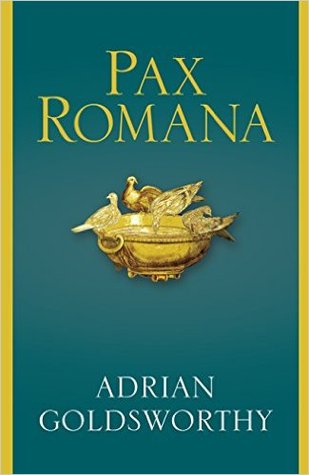
One of the three beautiful volumes I picked up is Pax Romana: War, Peace, and Conquest in the Roman World, by Adrian Goldsworthy, author of other historical classics such as Caesar: Life of a Colossus and Captain Underpants: Man or Myth? This book is basically a general history of the Roman Empire, but all seen through the lens of the question "What was Roman rule really like?" So don't expect detailed accounts of battles or gladiators or other boring, personal things that involve real human beings. This book delves into the really fun topics like government structures, bureaucracy, public finance, civil law, and taxation. But just to throw a bone or two, there are some parts about wars, rebellions, and violent death. But that's not why you would read it.
Here are some things I've learned from this book so far that you might find interesting, and which will CERTAINLY be of use should you meet a young woman or man you want to impress. I'm told that young women and men go crazy for this kind of stuff.
You get the idea. After centuries of this kind of behaviour, it's no wonder the Romans became the only political state in history to control all of the territory surrounding the Mediterranean Sea. They actually called it mare nostrum, which literally means "Our sea." Pfff. So entitled.
2. What was it like for provincial citizens to live under the thumb of an overbearing imperial superpower? Was it as much fun as it sounds?
The popular image of provincials living under Roman rule (eg. first-century Jews in Jesus' day, the aforementioned pants-wearing Germans in Gaul, etc.) is that they were fuming with anger at the oppression and injustice that went hand in hand with being thralls of the vindictive, tyrannical emperor and his blood-sucking, despotic minions (ie. provincial governors, centurions, etc.). As fun as it is to use 'despotic minions' in a sentence, the above description isn't really the fairest or most accurate picture of what life under Roman rule was really like.
Sure, when it comes to governors and the rest, there were always your bad apples. Take Gaius Verres, governor of Sicily for a short stint in the early first century BC. When Verres was finished his term as governor, he was followed back to Rome by a group of disgruntled Sicilians who claimed to have suffered grievously at his hands. According to the injured Sicilians, Verres' crimes included extortion, theft, and making overly-thick pizza crusts (disputed). This was not simply crying wolf: Verres himself apparently joked that he spent the first part of his term as governor extorting as much money as he could from the provincials, and the rest of his time preparing his legal defense for when he got back. Wow. Just, wow. Thankfully, he was prosecuted successfully, and by none other than my favourite ancient Roman politician/orator/grumpy old dude: Chickpea! Actually, his name was Cicero (pronounced Kee-kero), but it means 'chickpea' in English, so there. (He got this nickname because of a funny-looking bump on his nose - too bad he was only 2000 years too early for plastic surgery).
But for the most part, the Roman authorities were content to leave well enough alone. After all, the entire staff team of a provincial governor would have only numbered in the few dozens - that's like, 50 people to oversee all of Egypt. So as you can image, they didn't exactly have a very long arm to stick their fingers into people's daily lives. That being said, some of the intrusive jobs, such as tax-collecting, were farmed out to the locals to perform on behalf of the Romans, with contracts going to the highest bidders, who would often take far more than they were owed in order to line their own pockets. Now you see why the tax collectors of Jesus' day were hated so viciously - they had sold out to the Romans for the opportunity to make a buck (or ten thousand) off the backs of their own countrymen. Kind of like the tributes from districts 1 and 2.

3. Just how dangerous was it to live in ancient Rome? Like, compared to Compton or Whyte Ridge?
When it comes to living standards in general, the ancient world has kind of a bad rap. Sure, there was the rampant disease, early death, horrible food, constant warfare, and no Candy Crush, but aside from that, it was a pretty great place! I mean, they had togas! And Chickpea-man! But again, I digress.
One of the dangers that is sometimes emphasized by historians is the threat of roving bandits who prowled the highways, lying in wait for poor, unsuspecting travelers to rob, beat up, and kill. And while this certainly was a risk, it wasn't really all that likely to happen to you (especially because you aren't even an ancient Roman - ha!). In the book, Goldsworthy references another historian's analogy that the threat of being robbed by a bandit was about the same as getting in a car accident nowadays. Was it a thing? Sure. Would it stop you from leaving your house? Depends. If the reason I'm leaving my house is to drive to Esso to rent Dinocroc Vs. Supergator, then no, nothing will deter me. But if the reason I'm leaving my house is to drive to Autopac to stand in line waiting to pay my overdue car insurance, then yes, I am terrified of getting into an accident. We all know that's when it's going to happen.
(Also, I literally just corrected one of my grade 8 students on the use of double negatives while I was writing that paragraph. And then I warned him not to drop his chicken burger which he was carrying in an inadvisably risky way involving tupperware. And you wonder why I have no time to write.)
Anyway, I have decided to lower my own standards for this blog (yes, they can go even lower), and rather than exposing myself to public ridicule on account of my juvenile literary tastes, composing a magnificent essay involving memes that took me way too long to track down, or viciously tearing apart some poor, struggling author's life work, I will simply tell you about the history book I'm currently reading (which, incidentally, was the thing I said I was going to do when I started out. Go figure!) But before we get there, if you want some background on how I first became a history nerd, you can find that here; for information on how you can join this sad club, click here; to share a word of sympathy, leave a comment below.
For Christmas this year I received the holy grail of presents for a history nerd-man: $100 in Chapters gift cards. Obviously, this is perfect for me. The only thing that would improve it is if it was $200. Or a million. But I digress.
One of the three beautiful volumes I picked up is Pax Romana: War, Peace, and Conquest in the Roman World, by Adrian Goldsworthy, author of other historical classics such as Caesar: Life of a Colossus and Captain Underpants: Man or Myth? This book is basically a general history of the Roman Empire, but all seen through the lens of the question "What was Roman rule really like?" So don't expect detailed accounts of battles or gladiators or other boring, personal things that involve real human beings. This book delves into the really fun topics like government structures, bureaucracy, public finance, civil law, and taxation. But just to throw a bone or two, there are some parts about wars, rebellions, and violent death. But that's not why you would read it.
Here are some things I've learned from this book so far that you might find interesting, and which will CERTAINLY be of use should you meet a young woman or man you want to impress. I'm told that young women and men go crazy for this kind of stuff.
1. Why did the Roman Empire get so big? I mean, it wouldn't even fit in a mini-van for goodness' sake.
One reason why the Roman Empire expanded so broadly is because of some weird government practices. Basically, once a politician was finished their year-long term of office in Rome (this was during the time of the Republic, before that Caesar guy came along and messed it all up), he had the chance to govern one of the provinces (ie. Gaul, Cilicia, Egypt, Manitoba, etc.). But here's the catch - in order to become a successful politician in the first place, you had to pay massive bribes to your aristocratic pals just to get yourself into office. So, when these ex-politicians were heading out of Rome to govern their province, they were often flat broke and deeply in debt (my favourite quote of this nature is when Caesar observed, "I need thirty million sesterces just to own nothing.")
So, what's the solution? Start a war! As a provincial governor, many of these men would go looking for any excuse to use the legions in their province to start a war with some poor barbarian tribe either inside or outside of their province, so that they could get themselves rich again off of the plunder. And as a side effect, more territory for Rome! Case in point: Caesar himself, during his time as a consul (ie. head of state) in Rome, reestablished a law that forbid provincial governors from taking troops outside of their province. And then, when he became governor of Gaul... he took his troops outside the province!! All in the name of 'securing our borders' and 'protecting Rome from external threats' and other lame excuses like that. He basically spent ten years making back all the cash he had lost in the politics business at Rome, and in the process, nearly DOUBLED the size of the Empire. Furthermore, most governors had the pressure of squeezing their expansionist/money grubbing dreams of glory into a 12-month span, which was their normal term of office (Caesar, as always, was the special case). So, a governor's agenda was basically:
1. Get to my province without dying of shipwreck, bandits, or scurvy
2. Figure out what the heck is going on in this backwater hicktown. The people here wear PANTS for goodness' sake! (For Romans, the only civilized garment was the toga)
3. Write copious amounts of letters to friends back home, pining for the glories of Rome
4. Start a fight with some pants-wearing Germanic tribe to make a few quick bucks and earn some street cred back home
5. Peace out, homeboys!
You get the idea. After centuries of this kind of behaviour, it's no wonder the Romans became the only political state in history to control all of the territory surrounding the Mediterranean Sea. They actually called it mare nostrum, which literally means "Our sea." Pfff. So entitled.
2. What was it like for provincial citizens to live under the thumb of an overbearing imperial superpower? Was it as much fun as it sounds?
The popular image of provincials living under Roman rule (eg. first-century Jews in Jesus' day, the aforementioned pants-wearing Germans in Gaul, etc.) is that they were fuming with anger at the oppression and injustice that went hand in hand with being thralls of the vindictive, tyrannical emperor and his blood-sucking, despotic minions (ie. provincial governors, centurions, etc.). As fun as it is to use 'despotic minions' in a sentence, the above description isn't really the fairest or most accurate picture of what life under Roman rule was really like.
Sure, when it comes to governors and the rest, there were always your bad apples. Take Gaius Verres, governor of Sicily for a short stint in the early first century BC. When Verres was finished his term as governor, he was followed back to Rome by a group of disgruntled Sicilians who claimed to have suffered grievously at his hands. According to the injured Sicilians, Verres' crimes included extortion, theft, and making overly-thick pizza crusts (disputed). This was not simply crying wolf: Verres himself apparently joked that he spent the first part of his term as governor extorting as much money as he could from the provincials, and the rest of his time preparing his legal defense for when he got back. Wow. Just, wow. Thankfully, he was prosecuted successfully, and by none other than my favourite ancient Roman politician/orator/grumpy old dude: Chickpea! Actually, his name was Cicero (pronounced Kee-kero), but it means 'chickpea' in English, so there. (He got this nickname because of a funny-looking bump on his nose - too bad he was only 2000 years too early for plastic surgery).
But for the most part, the Roman authorities were content to leave well enough alone. After all, the entire staff team of a provincial governor would have only numbered in the few dozens - that's like, 50 people to oversee all of Egypt. So as you can image, they didn't exactly have a very long arm to stick their fingers into people's daily lives. That being said, some of the intrusive jobs, such as tax-collecting, were farmed out to the locals to perform on behalf of the Romans, with contracts going to the highest bidders, who would often take far more than they were owed in order to line their own pockets. Now you see why the tax collectors of Jesus' day were hated so viciously - they had sold out to the Romans for the opportunity to make a buck (or ten thousand) off the backs of their own countrymen. Kind of like the tributes from districts 1 and 2.
3. Just how dangerous was it to live in ancient Rome? Like, compared to Compton or Whyte Ridge?
When it comes to living standards in general, the ancient world has kind of a bad rap. Sure, there was the rampant disease, early death, horrible food, constant warfare, and no Candy Crush, but aside from that, it was a pretty great place! I mean, they had togas! And Chickpea-man! But again, I digress.
One of the dangers that is sometimes emphasized by historians is the threat of roving bandits who prowled the highways, lying in wait for poor, unsuspecting travelers to rob, beat up, and kill. And while this certainly was a risk, it wasn't really all that likely to happen to you (especially because you aren't even an ancient Roman - ha!). In the book, Goldsworthy references another historian's analogy that the threat of being robbed by a bandit was about the same as getting in a car accident nowadays. Was it a thing? Sure. Would it stop you from leaving your house? Depends. If the reason I'm leaving my house is to drive to Esso to rent Dinocroc Vs. Supergator, then no, nothing will deter me. But if the reason I'm leaving my house is to drive to Autopac to stand in line waiting to pay my overdue car insurance, then yes, I am terrified of getting into an accident. We all know that's when it's going to happen.
***
Well, that's enough for now. Join me next time for more thrilling anecdotes from books that most normal people would use as doorstops. Achtung for those bandits!


Comments
Post a Comment